
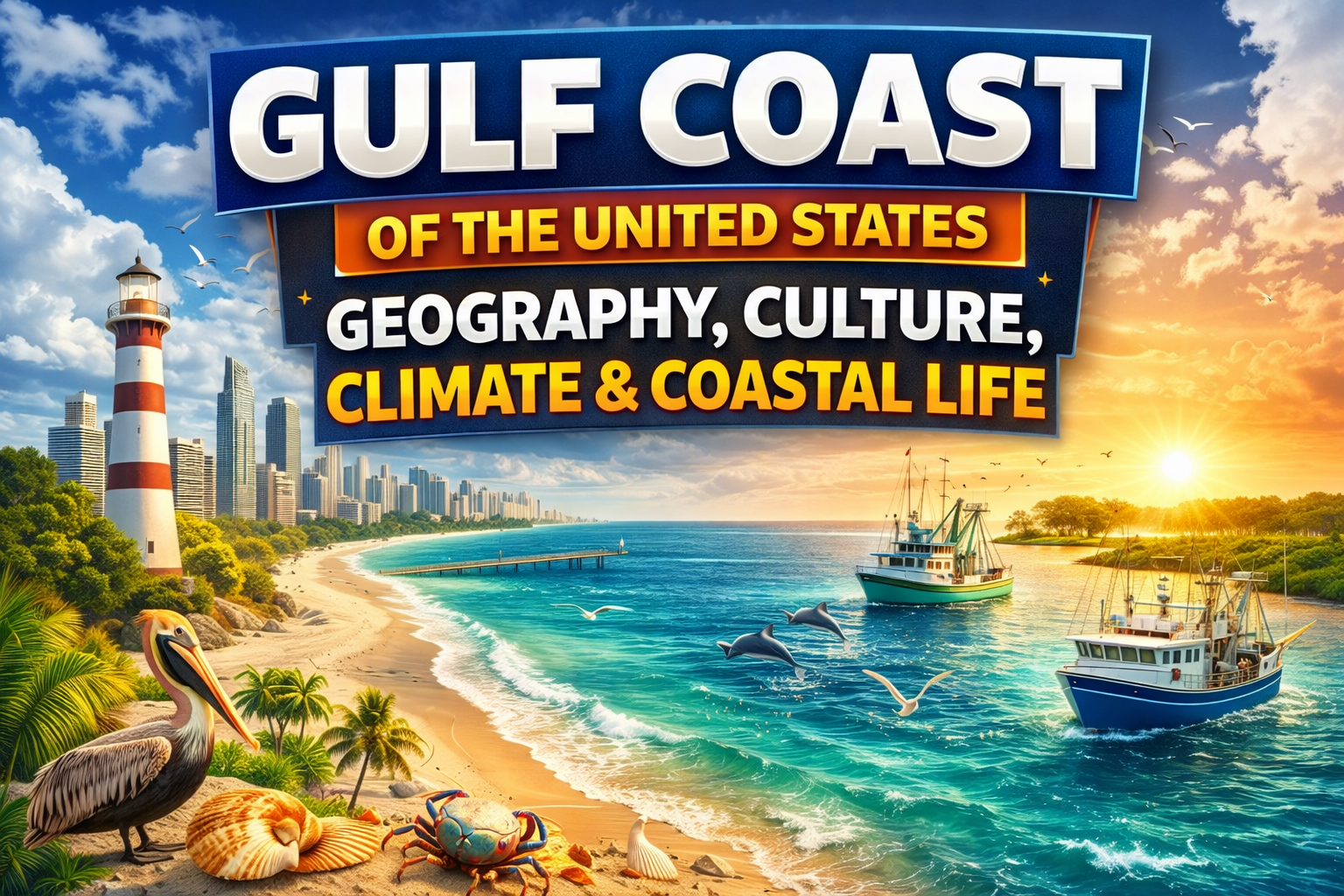
Why the Gulf Coast of the United States Feels Like Its Own World
The gulf coast of the united states is more than a stretch of shoreline hugging the Gulf of Mexico. It is a living, breathing region shaped by water, weather, music, food, resilience, and a pace of life that feels unmistakably Southern yet deeply global. From sugar-white beaches to working ports, from hurricane-scarred towns to booming cultural hubs, the Gulf Coast tells a uniquely American story—one where nature and humanity constantly negotiate space.
For travelers, the region feels welcoming and familiar, yet layered with surprises. For residents, it is home in the deepest sense: imperfect, vulnerable, and fiercely loved. Understanding the gulf coast of the united states requires looking beyond postcard beaches and into the rhythms of daily life shaped by tides, trade, and tradition.
Defining the Gulf Coast: Geography with Consequences
The gulf coast of the united states spans five states—Texas, Louisiana, Mississippi, Alabama, and Florida—each touching the warm waters of the Gulf of Mexico. While often grouped together, these coastal areas differ dramatically in landscape and identity. Barrier islands protect some shorelines, while vast wetlands and deltas dominate others, particularly in southern Louisiana.
This geography matters. The Gulf’s shallow, warm waters fuel intense storms, nurture marine ecosystems, and support one of the most productive fishing regions in the country. According to data frequently cited by agencies like NOAA and the U.S. Geological Survey, the Gulf Coast supports a significant portion of America’s seafood supply and energy infrastructure, making it economically vital far beyond the South.
The Gulf Coast States at a Glance
| State | Signature Coastal Feature | Cultural Identity | Economic Strength |
|---|---|---|---|
| Texas | Long, flat barrier islands | Independent, industrial, diverse | Energy, shipping |
| Louisiana | Mississippi River Delta | Creole, Cajun, musical | Ports, seafood |
| Mississippi | Quiet beaches, small towns | Laid-back Southern | Tourism, fishing |
| Alabama | Compact but vibrant coast | Historic, family-oriented | Shipbuilding |
| Florida | Emerald and white-sand beaches | Tourism-driven, global | Travel, real estate |
This diversity is why the gulf coast of the united states resists simple definitions. It is not one coast, but many woven together.
Climate: Beauty, Heat, and High Stakes
Life along the gulf coast of the united states is shaped by climate more than almost any other American region. Summers are long, humid, and intense, while winters remain mild enough to keep beaches active year-round. This warmth fuels tourism but also carries risk.
Hurricane season is not an abstract concept here; it is a lived reality. Storms like Katrina, Harvey, and Ian have left permanent marks on communities and policies. Yet what stands out most is not destruction, but recovery. The Gulf Coast has developed a culture of preparedness and rebuilding that reflects deep-rooted resilience. Homes are raised, building codes evolve, and neighbors show up for one another in ways that feel increasingly rare elsewhere.
Culture Along the Coast: Where America Blends
Culture is where the gulf coast of the united states truly comes alive. Few regions in the country reflect such a layered mix of Native American, African, European, Caribbean, and Latin influences. Nowhere is this more visible than in New Orleans, where food, music, and language merge into something that feels globally unique yet intensely local.
Music spills into streets, whether it’s jazz, blues, zydeco, or modern Southern hip-hop. Food traditions are deeply regional, with recipes passed down through generations rather than written down. Gumbo, crawfish boils, shrimp po’boys, and smoked oysters are not culinary trends here; they are part of family identity.
Comparing the Gulf Coast to Other U.S. Coasts
| Feature | Gulf Coast of the United States | East Coast | West Coast |
|---|---|---|---|
| Water Temperature | Warm year-round | Seasonal | Cold |
| Cultural Pace | Relaxed, communal | Fast, historic | Progressive, tech-driven |
| Natural Risk | Hurricanes | Nor’easters | Earthquakes |
| Food Identity | Seafood-centric, regional | International mix | Health-focused |
| Cost of Living | Generally lower | Higher in cities | High |
This comparison helps explain why the gulf coast of the united states feels emotionally distinct. Life here moves slower, conversations last longer, and traditions hold more weight.
Economic Engine Hidden in Plain Sight
The Gulf Coast is often underestimated economically. While tourism grabs headlines, the region quietly powers major segments of the U.S. economy. Ports along the coast handle a massive share of America’s imports and exports, particularly energy products and agricultural goods. Cities like Houston are global hubs for energy, medicine, and international trade.
Fishing remains both a livelihood and a cultural anchor. Shrimping fleets, oyster beds, and commercial fisheries connect small coastal towns directly to national food systems. When environmental disruptions occur, the effects ripple far beyond the shoreline, influencing prices and availability across the country.
Environmental Challenges and the Fight to Protect the Coast
The gulf coast of the united states sits on the front lines of climate change. Coastal erosion, rising sea levels, and disappearing wetlands threaten homes and ecosystems alike. Louisiana, in particular, loses land at an alarming rate, a reality frequently highlighted by environmental research institutions and conservation groups.
Yet this is also a region of innovation. Large-scale wetland restoration projects, living shorelines, and community-led conservation efforts are redefining how Americans think about coastal protection. The Gulf Coast has become a testing ground for balancing economic growth with environmental responsibility, a conversation increasingly relevant nationwide.
Tourism Beyond the Beach
While beaches in places like Gulf Shores and Florida’s Panhandle draw millions, the real magic of the gulf coast of the united states lies inland as well. Historic towns, bayous, wildlife refuges, and cultural festivals offer experiences that feel personal rather than packaged.
Travelers often speak about the kindness of strangers, the ease of conversation, and the sense that time stretches just a bit longer here. That emotional takeaway is what turns first-time visitors into lifelong advocates for the region.
Key Takeaways About the Gulf Coast
| Dimension | What Makes It Unique |
|---|---|
| Identity | Deeply local yet globally influenced |
| Economy | Tourism plus heavy industry |
| Environment | Fragile but fiercely defended |
| Culture | Food, music, and storytelling |
| Lifestyle | Slower pace, strong community |
These elements combine to make the gulf coast of the united states one of the most complex and emotionally resonant regions in the country.
Conclusion: The Gulf Coast as America’s Emotional Coastline
The gulf coast of the united states is not just where land meets water; it is where history meets hope. It carries the scars of storms and the warmth of shared meals, the tension between industry and nature, and the quiet pride of communities that refuse to be defined by disaster.
To know the Gulf Coast is to understand a version of America that values connection over speed and memory over perfection. In a country constantly reinventing itself, the Gulf Coast remains rooted—weathered, welcoming, and unmistakably alive.