
Introduction: The Exhaustion That Doesn’t Make Sense 😴
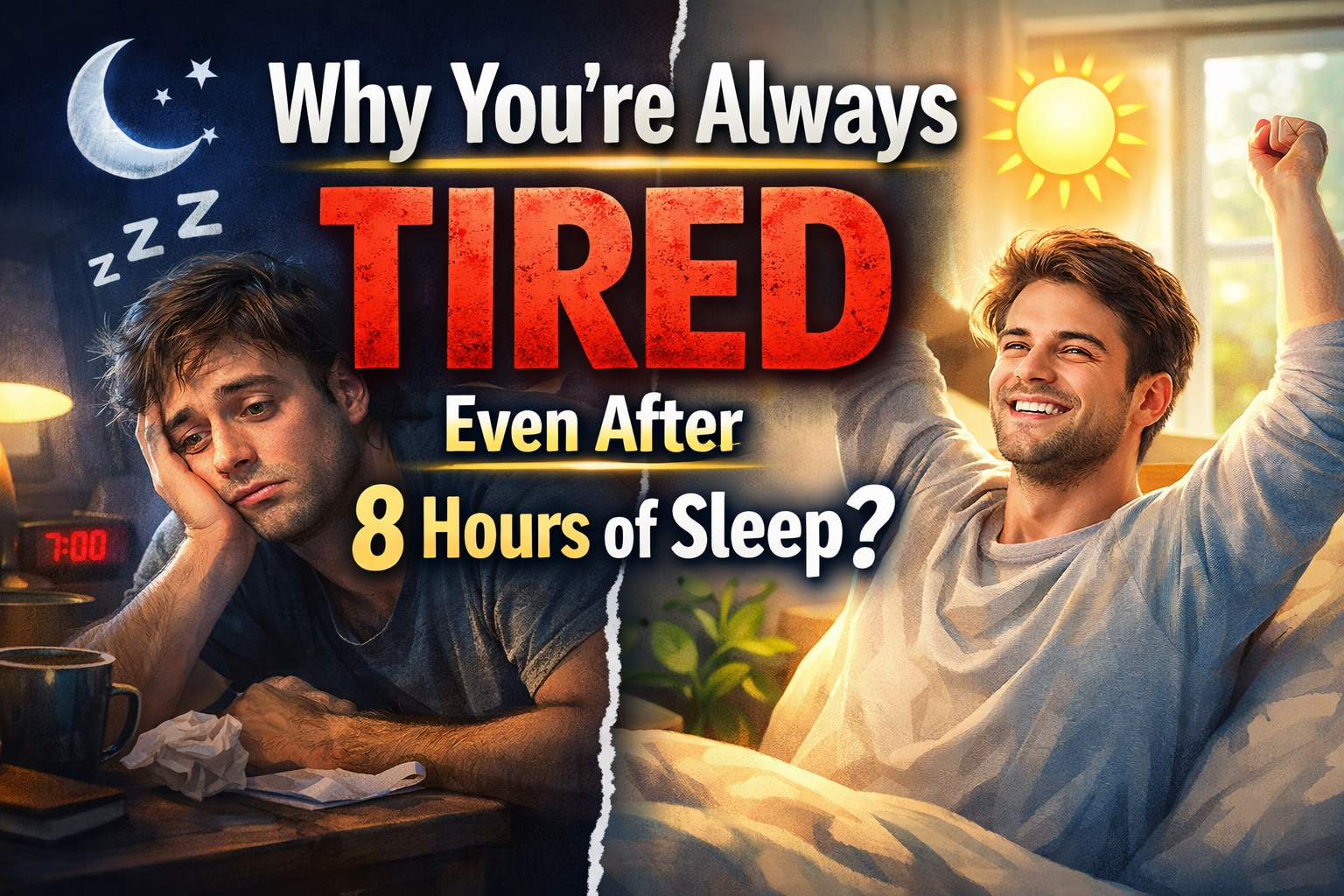
Why You’re Always Tired Even After 8 Hours of Sleep? Discover the real causes of constant fatigue, poor sleep quality, nutrient deficiencies, and practical tips to boost your energy naturally and feel refreshed every day.
There’s a strange kind of tiredness that doesn’t go away with sleep. You follow the “rules” — sleep early, wake up after 7–8 hours — yet your body feels heavy, your eyes burn, and your mind refuses to fully wake up. It feels less like rest and more like you simply paused your exhaustion for a few hours.
This is where most people misunderstand fatigue. Sleep is not just about duration; it is about depth, rhythm, and recovery. When any one of these breaks, your body silently carries forward unfinished repair work into the next day.
What you’re feeling is not laziness. It’s not a lack of discipline. It’s a signal. Your body is trying to tell you that something deeper is out of balance.
💤 The Difference Between Sleeping and Recovering
You can lie in bed for eight hours and still wake up unrested because your body never entered the phases where real healing happens. Deep sleep is where muscles repair, hormones reset, and energy systems recharge. If that stage is disrupted, the body wakes up incomplete.

A common pattern is staying in light sleep for most of the night. You may not even remember waking up, but your brain never truly switched off. This creates a strange paradox — technically you slept, but biologically you didn’t rest.
🧾 Sleep Quality vs Sleep Quantity
| Factor | Sleep Quantity 😴 | Sleep Quality 🌙 |
|---|---|---|
| Hours | 7–8 hours | May still be poor |
| Brain recovery | Limited | Deep restoration |
| Morning energy | Low | High |
| Focus | Foggy | Sharp |
| Body repair | Incomplete | Effective |
The truth is simple but uncomfortable: your body doesn’t count hours, it measures recovery.
🧠 When Your Mind Refuses to Rest
Your body can be still, but your mind can still be running marathons. Thoughts don’t stop just because you closed your eyes. In fact, silence often makes them louder.
This mental activity drains energy even during sleep. The brain continues processing emotions, worries, unfinished conversations, and imagined scenarios. By morning, instead of feeling fresh, you feel like you’ve been working all night.
This is why overthinkers often wake up more tired than people who had physically exhausting days. Mental fatigue is subtle, but it cuts deeper.
There’s also an emotional layer. When stress becomes constant, your body stays in a low-level alert mode. It never fully relaxes, and without relaxation, deep sleep cannot happen.
🥗 Food: The Energy You Don’t Realize You’re Losing
Energy is not created in sleep alone; it begins with what you feed your body. If your daily food lacks essential nutrients, your body struggles to produce sustained energy, no matter how long you sleep.
Highly processed food, sugar spikes, and irregular eating patterns create unstable energy cycles. You feel temporarily active after eating, but that energy quickly crashes, leaving behind fatigue that lingers into the night.

There is also a hidden truth many ignore — micronutrients quietly control your energy levels. A deficiency in iron, vitamin B12, or magnesium can make your body feel constantly drained, even if everything else seems fine.
🧾 Energy Impact of Food Choices
| Food Type 🍔🥗 | Immediate Effect ⚡ | Long-Term Energy 🔋 |
|---|---|---|
| Junk food | Quick boost | Sudden crash |
| Sugary drinks | High spike | Fatigue later |
| Balanced meals | Stable energy | Sustained stamina |
| Nutrient-rich diet | Moderate boost | Long-lasting energy |
The body is honest. It gives back what you give it. Poor fuel leads to poor performance — even in sleep.
☕ The Caffeine Cycle You Didn’t Notice
Caffeine feels like a solution, but it often becomes the problem. It doesn’t give you real energy; it temporarily blocks the signal that tells your brain you’re tired.
Over time, this creates a cycle. You drink coffee to stay awake, your sleep quality drops, you wake up tired again, and then you need even more caffeine the next day.

The body slowly forgets how to regulate energy naturally. Instead of fixing fatigue, caffeine stretches it across multiple days.
🧾 Caffeine Effect Cycle
| Stage 🔄 | What Happens |
|---|---|
| Consumption ☕ | Temporary alertness |
| Sleep disruption 🌙 | Reduced deep sleep |
| Morning fatigue 😴 | Low natural energy |
| Increased intake 🔁 | Dependency grows |
Breaking this cycle doesn’t require quitting caffeine completely. It requires awareness — especially avoiding it late in the day.
🧬 Hidden Deficiencies: The Silent Energy Killers
Sometimes fatigue is not about lifestyle at all. It’s internal. Many people carry deficiencies for months or even years without realizing it.
Iron deficiency reduces oxygen delivery in the body, making you feel constantly weak. Vitamin B12 affects nerve function and energy production. Vitamin D impacts mood and overall vitality.

The tricky part is that these don’t always show dramatic symptoms. Instead, they slowly drain your energy until tiredness becomes your normal.
🧾 Common Deficiencies and Effects
| Nutrient 🧪 | Impact on Body ⚠️ |
|---|---|
| Iron | Weakness, fatigue |
| Vitamin B12 | Brain fog, low energy |
| Vitamin D | Mood drops, tiredness |
| Magnesium | Poor sleep, muscle fatigue |
A simple health check can sometimes explain months of unexplained exhaustion.
📱 Screens: The Invisible Sleep Destroyer
Modern life has quietly rewired our nights. Screens have become the last thing we see before sleep and the first thing we check after waking up.
The blue light from devices interferes with melatonin, the hormone responsible for sleep. This delays sleep onset and reduces its depth.

Even worse, content consumption keeps the brain stimulated. Instead of preparing for rest, your mind stays active, engaged, and alert.
This creates a contradiction — your body is tired, but your brain refuses to slow down.
🧾 Screen Impact on Sleep
| Habit 📱 | Effect on Sleep 🌙 |
|---|---|
| Late-night scrolling | Delayed sleep |
| Bright screen use | Reduced melatonin |
| Emotional content | Mental stimulation |
| Screen-free routine | Better deep sleep |
Small changes like reducing screen exposure before bed can create noticeable differences within days.
😴 When Sleep Itself Is the Problem
There are cases where even good habits don’t fix tiredness. This is when underlying sleep disorders come into play.
Conditions like sleep apnea interrupt breathing during sleep, preventing deep rest. You may not even realize it’s happening, but your body wakes up multiple times during the night.

The result is fragmented sleep that never fully restores energy.
🧾 Signs That Need Attention
| Symptom ⚠️ | Possible Meaning |
|---|---|
| Loud snoring | Sleep disruption |
| Frequent waking | Poor sleep cycles |
| Daytime sleepiness | Incomplete rest |
| Morning headaches | Oxygen imbalance |
Ignoring these signs can prolong fatigue unnecessarily. Recognizing them can change everything.
🌅 Conclusion: Your Body Isn’t Lazy — It’s Communicating
There’s a quiet misunderstanding that many people carry for years — the belief that feeling tired all the time is just part of life. You wake up heavy, push through the day, depend on small boosts like tea or coffee, and tell yourself this is normal. But deep down, something feels off. And that feeling is real.
Constant tiredness is not random. It is not weakness. It is not a lack of motivation. It is a message — and more importantly, it is a consistent message.
Your body is not designed to work against you. It is designed to protect you, guide you, and signal when something is out of alignment. Fatigue is one of its most honest signals. It doesn’t shout, it doesn’t panic — it simply repeats itself until you finally listen.
Think about it for a moment. When your body has enough rest, balanced nutrition, emotional stability, and proper recovery, energy flows naturally. You don’t need to chase it. You don’t need to force yourself to function. You don’t need constant stimulation just to stay awake. You feel light, focused, and present.
But when even one of those elements begins to slip — whether it’s poor sleep quality, mental overload, hidden deficiencies, or lifestyle imbalance — your body starts compensating. And that compensation feels like tiredness.
The problem is not that you’re tired. The problem is that you’ve been taught to ignore it.
Instead of asking “Why am I tired?”, most people jump straight to “How do I stay awake?”. That small shift in thinking changes everything. One question leads to awareness. The other leads to temporary fixes.
Caffeine, scrolling, pushing through exhaustion — these are not solutions. They are delays. They don’t remove fatigue; they simply push it further into your system, where it builds quietly. And over time, that quiet buildup becomes your new normal.
But here’s the truth that often gets overlooked — your body doesn’t want to stay tired. It wants to feel energetic. It wants to repair itself. It wants to function at its best. All it needs is the right conditions.
When you start improving sleep quality instead of just increasing sleep time, your mornings begin to feel lighter. When you reduce mental clutter, your mind stops carrying unnecessary weight into the night. When your nutrition supports your body instead of draining it, your energy stabilizes instead of crashing.
And slowly, without forcing anything, you begin to feel like yourself again.
There is also an emotional layer to this. Sometimes tiredness is not just physical — it is the result of carrying too much internally. Unresolved stress, constant pressure, or even silent worries can drain energy in ways that sleep alone cannot fix. In such cases, rest is not just about lying down — it’s about letting go.
That’s why real recovery is not a single action. It is a combination of small corrections that align your body, mind, and habits.
The shift doesn’t happen overnight. But it doesn’t need to. Even small awareness creates change. When you start noticing your patterns — your sleep habits, your mental state, your daily routine — you begin to understand your body instead of fighting it.
And once that understanding develops, something powerful happens.
You stop blaming yourself for feeling tired.
You stop forcing energy that isn’t there.
You stop chasing quick fixes.
Instead, you start building real energy — the kind that lasts, the kind that feels natural, the kind that doesn’t disappear after a few hours.
Because energy is not something you manufacture. It is something your body produces when it feels safe, supported, and balanced.
So the next time you wake up feeling tired even after eight hours of sleep, don’t rush to label it as a bad day or a lack of discipline. Pause for a moment.
Ask yourself what your body might be trying to tell you.
Because beneath that tiredness, there is always a reason. And once you understand that reason, you don’t just fix your sleep — you transform the way your body experiences energy.
And that’s when everything changes. 🌿
🔍 SEO Keywords (20 High-Search Terms)
why am i always tired
tired after 8 hours sleep
constant fatigue causes
low energy even after sleep
why do i feel sleepy all day
sleep quality vs quantity
causes of tiredness in adults
mental fatigue symptoms
vitamin deficiency tiredness
iron deficiency fatigue
how to improve sleep quality
effects of blue light on sleep
overthinking and sleep problems
why caffeine makes you tired
energy boosting habits
how to stop feeling tired
sleep disorders symptoms
morning fatigue reasons
healthy sleep tips
natural ways to boost energy
❓ Frequently Asked Questions (FAQs)
1. 😴 Why do I still feel tired even after 8 hours of sleep?
Feeling tired after a full night’s sleep usually means your sleep quality is poor, not the duration. Your body might not be entering deep sleep stages where real recovery happens. Factors like stress, screen time, irregular sleep schedules, or even hidden health issues can prevent proper rest, leaving you exhausted in the morning.
2. 🧠 Can overthinking really make me feel physically tired?
Yes, absolutely. The brain consumes a significant amount of energy, and when it stays active with constant thoughts, worries, or mental loops, it creates mental fatigue. This kind of tiredness often feels heavier because even during sleep, your mind doesn’t fully relax, which reduces overall recovery.
3. ☕ Does drinking coffee make tiredness worse?
In many cases, yes. Coffee doesn’t give real energy — it simply blocks the feeling of tiredness for a while. Over time, excessive caffeine can disrupt your sleep cycle, making your sleep lighter and less effective. This creates a loop where you feel more tired and depend on even more caffeine the next day.
4. 🧬 Which vitamin deficiencies can cause constant fatigue?
Several deficiencies are strongly linked to low energy levels. The most common ones include iron, vitamin B12, vitamin D, and magnesium. These nutrients play a key role in energy production, brain function, and muscle recovery. If your tiredness feels constant and unexplained, it may be worth checking your levels through a simple test.
5. 📱 How does phone usage at night affect my sleep?
Using your phone before bed exposes your eyes to blue light, which reduces melatonin — the hormone responsible for sleep. This makes it harder to fall asleep and reduces the depth of your sleep. Even if you sleep for many hours, the quality drops, and you wake up feeling tired instead of refreshed.