
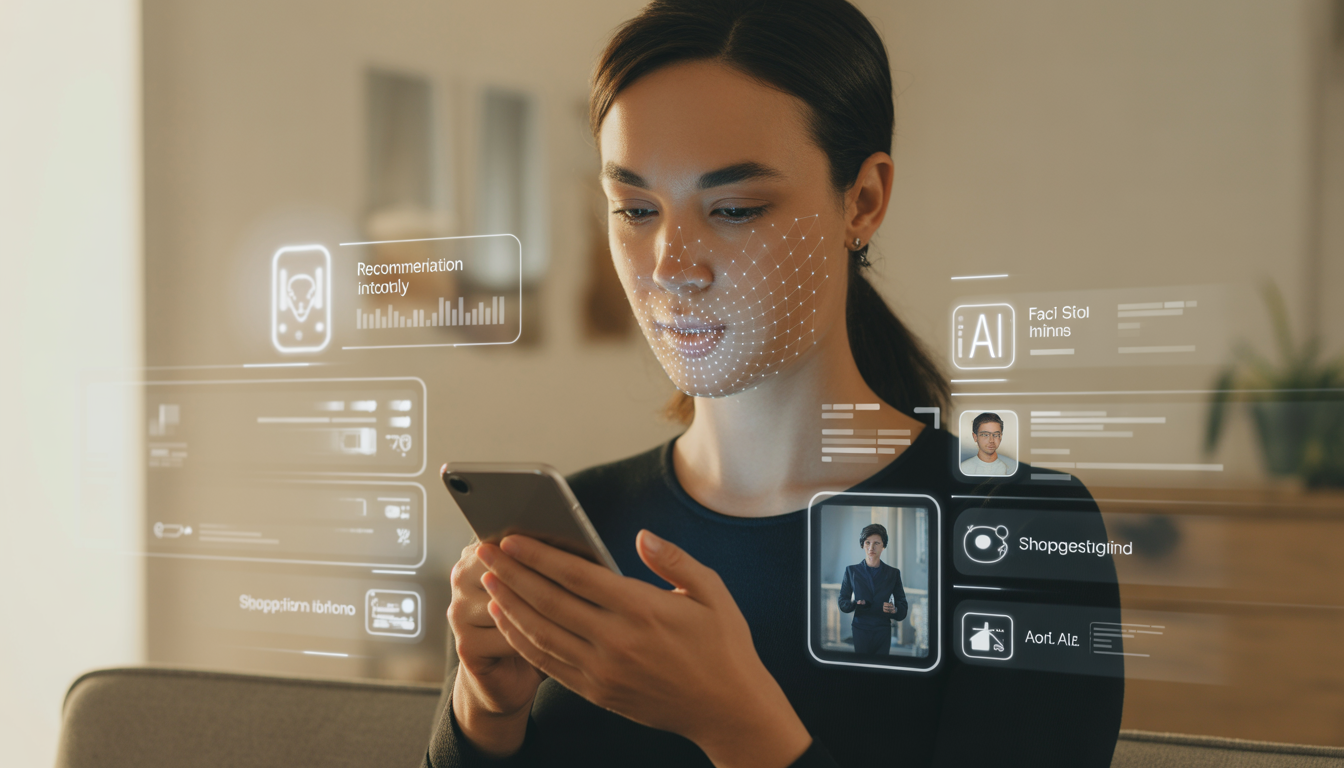
Introduction: AI Didn’t Arrive Loudly—It Slipped In Silently
When people hear the term artificial intelligence, they often imagine something dramatic—robots, job loss, or futuristic cities. But the reality is far less dramatic and far more subtle. AI didn’t show up suddenly and announce itself. Instead, it blended into the background of everyday life.
Today, artificial intelligence works quietly behind screens, apps, and systems we use daily. It helps us choose what to watch, what to buy, where to go, and even how we communicate. Most people interact with AI dozens of times a day without realizing it.
Understanding how AI is changing daily life is important—not because it’s dangerous, but because awareness gives us control. Let’s look at how AI is already shaping our routines in ways we rarely notice.
1. AI in Smartphones: Your Invisible Daily Assistant
Smartphones are one of the most common examples of artificial intelligence in everyday life. Almost every feature we use today relies on AI in some form.
Facial recognition systems don’t just scan your face once—they continuously learn from lighting conditions, angles, and changes in your appearance. Over time, the AI improves accuracy, making your phone more secure and convenient.
Typing on your phone is another area where AI plays a major role. Predictive text and autocorrect don’t work randomly. They study your writing habits, frequently used words, and sentence patterns. That’s why your phone often knows what you’re about to type before you finish the sentence.
Voice assistants like Google Assistant or Siri use AI to understand context, tone, and intent. They are no longer simple command-based tools. They are learning conversational behavior—how humans naturally speak.
2. AI Controls What You See on the Internet
One of the most powerful impacts of AI on human life is how it controls information flow online. Social media platforms use artificial intelligence to decide which posts appear on your feed. AI analyzes how long you look at a post, whether you like it, comment on it, or scroll past it quickly. Based on this data, the system learns what keeps your attention.
Over time, AI creates a personalized digital environment just for you. This can feel convenient, but it also limits exposure to different viewpoints. You may start seeing only content that matches your interests, beliefs, and emotions.
Search engines also use AI to personalize results. The information you see may be very different from what someone else sees, even if both of you search for the same thing. This silent personalization shapes opinions without direct influence.
3. Online Shopping: AI Predicts Your Choices
E-commerce platforms are another strong example of AI in daily routine.
When you browse online stores, AI tracks your behavior—products viewed, time spent on pages, and items added to your cart. This data helps AI predict what you are most likely to buy next.
That’s why recommended products often feel surprisingly accurate. AI analyzes millions of customer behaviors to find patterns and match them to your preferences.
AI also influences pricing strategies. In some cases, prices change based on demand, availability, and user behavior. This process happens instantly, without human involvement.
Online shopping feels simple, but behind the scenes, AI is constantly analyzing and optimizing your experience.
4. AI Shapes Entertainment and Free Time
Entertainment is no longer random—it is curated by artificial intelligence.
Streaming platforms like Netflix and Spotify use AI to understand your preferences at a deep level. They analyze what you watch, when you watch it, how often you stop mid-content, and what you replay.
Based on this, AI recommends content that matches your mood and habits. This personalization increases engagement and keeps users coming back.
Even video games use AI to adjust difficulty levels, control characters, and respond to player behavior. This makes entertainment more immersive and tailored to individual users.
AI doesn’t just entertain—it designs how we relax.

5. AI at Work: Silent Support and Surveillance
AI has quietly transformed workplaces across industries.
Email systems use AI to filter spam, suggest replies, and organize inboxes. Scheduling tools automatically find the best meeting times based on availability and past behavior.
Content creation tools assist with grammar, structure, and formatting. Designers, writers, and marketers often rely on AI-powered software without realizing how much it influences final output.
At the same time, many organizations use AI to track productivity, monitor performance, and even screen job applicants. This raises concerns about transparency and fairness, especially when decisions are made without human explanation.
AI at work is helpful—but it also raises important ethical questions.
6. AI in Health, Fitness, and Lifestyle
Artificial intelligence in everyday life also extends to health and wellness. Fitness apps track steps, sleep patterns, heart rate, and activity levels. AI analyzes this data to provide personalized recommendations for improving health. Mental health apps use AI chat systems to help users manage stress, anxiety, and emotions. While these tools don’t replace professionals, they offer support where access to care is limited. In healthcare systems, AI assists doctors by analyzing medical data faster and more accurately. It helps detect patterns that humans might miss, improving diagnosis and treatment planning. AI’s role in health is quiet—but deeply impactful.
7. AI Is Changing How Humans Think and Decide
Perhaps the most subtle impact of AI on human life is how it affects thinking patterns. With AI making decisions for us—routes, recommendations, reminders—we rely less on memory and judgment. This convenience saves time, but it also reduces mental effort. Social media algorithms encourage quick reactions instead of deep reflection. Over time, attention spans shorten, and instant gratification becomes the norm. AI is not changing us forcefully. It is changing us gradually, by making thinking optional.
8. Benefits and Risks of Living with AI
AI brings undeniable benefits: efficiency, personalization, and ease of life. It helps people manage busy schedules and access information faster. However, the risks include privacy loss, data misuse, and dependency. When AI operates invisibly, people may not question its influence. The real danger is not AI—it’s unawareness.
Conclusion: Awareness Is the Real Advantage
Artificial intelligence is already part of daily life. It influences choices, behavior, and routines without demanding attention. The key is not to reject AI, but to understand it. When people become aware of how AI is changing daily life, they regain control over their decisions. The future belongs not to those who fear AI—but to those who understand it.