
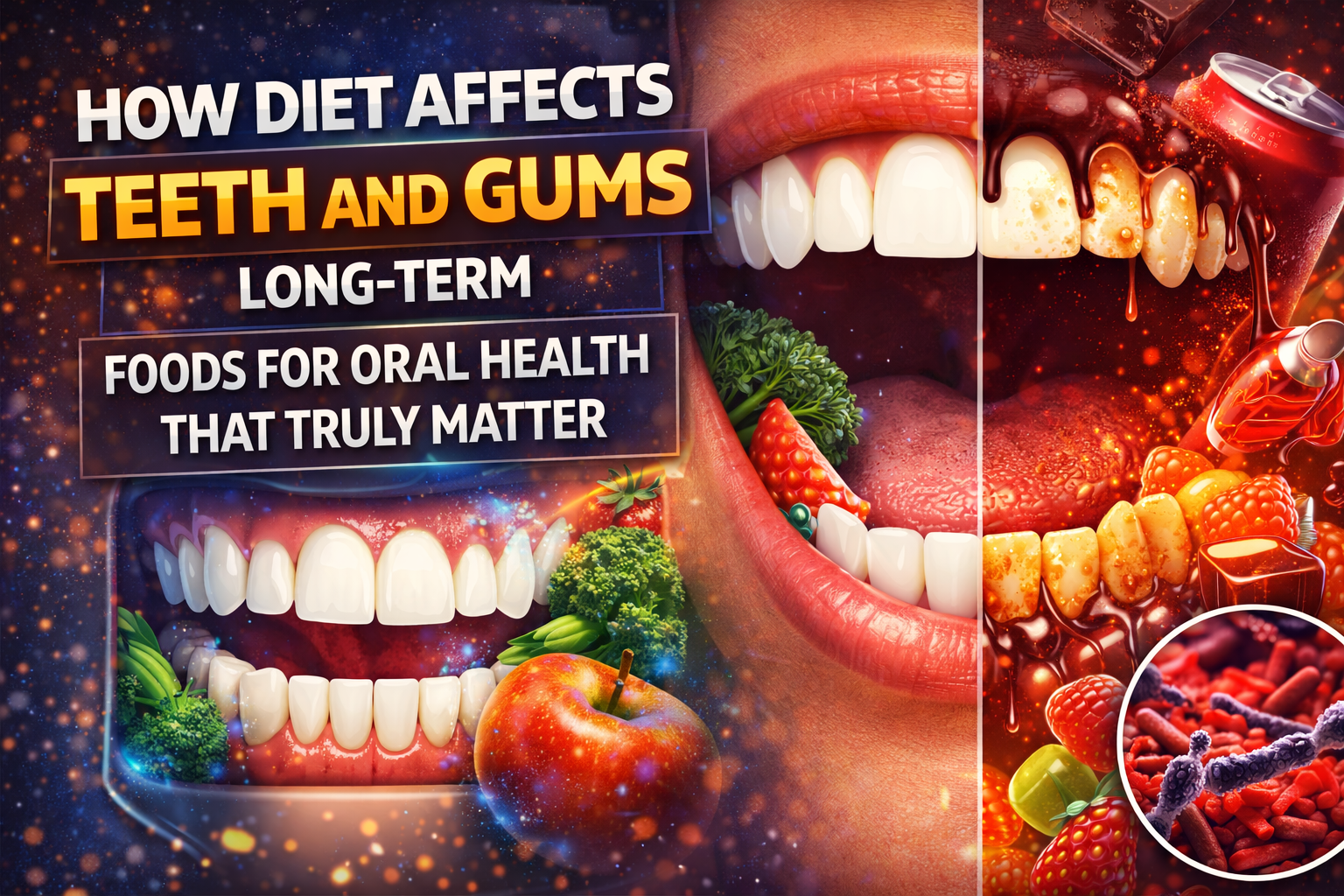
How Diet Affects Teeth and Gums Long-Term: A Doctor’s Perspective on Foods for Oral Health
Most people think cavities and gum problems happen suddenly. As a doctor, I can tell you they don’t. They are slow stories written by daily choices—especially food choices. What you eat today doesn’t just affect your waistline or energy. It quietly shapes the future of your teeth and gums.
I’ve seen patients who brush twice a day, floss regularly, and still struggle with sensitivity, bleeding gums, and enamel erosion. When we look deeper, the real cause often appears on their plate. The truth is simple but uncomfortable: foods for oral health matter more than most people realize, and poor dietary habits leave long-term damage that no toothpaste can fully undo. This article is not about fear. It’s about awareness, balance, and realistic change—explained in a human way, not a lecture.
The Hidden Relationship Between Diet and Oral Health
Your mouth is not separate from your body. Every time you eat, you feed two things at once: yourself and the bacteria living in your mouth. Some bacteria protect you. Others harm you. Diet decides which group grows stronger over time. When sugary or acidic foods dominate the diet, harmful bacteria flourish. They produce acids that weaken enamel and inflame gums. On the other hand, nutrient-rich foods for oral health help strengthen enamel, improve saliva quality, and support gum tissue repair.
What makes this process dangerous is how quiet it is. Damage doesn’t announce itself immediately. It accumulates silently, often for years.
A Doctor’s Gentle Recommendation
If you’ve reached this point and recognized yourself in these symptoms—bleeding gums, sensitivity that comes and goes, bad breath that brushing doesn’t fully fix, or the feeling that your mouth never feels truly healthy—then I want to speak to you honestly, as a doctor would in a quiet consultation room.

Diet lays the foundation, but sometimes the oral microbiome needs extra support to rebalance after years of damage. This is where I personally found ProDentim helpful. I didn’t see it as a “quick fix,” but as a way to support the good bacteria my mouth had lost over time.
What I liked most is that it works with your body, not against it—no harsh chemicals, no aggressive treatments. Over consistent use, I noticed calmer gums, fresher breath, and fewer flare-ups that had bothered me for years.
If you’re curious and want to see whether ProDentim could support your oral health journey, I recommend learning more directly from the official source so you can review the ingredients, science, and user experiences yourself.
👉 You can explore ProDentim here and decide if it’s right for you.
A Long-Term View: Teeth and Gums Don’t Forget
Many people ask me, “Doctor, I’ve stopped eating junk food—why are my teeth still weak?” The answer lies in memory. Teeth and gums have long memories. Years of nutritional neglect don’t disappear in a few months. Enamel does not regenerate. Gums heal slowly. If calcium, vitamin D, magnesium, and antioxidants were missing for years, the structure of your oral tissues reflects that absence. This is why prevention through diet is far more powerful than repair.
Table: How Daily Diet Choices Shape Oral Health Over Time
| Dietary Pattern | Short-Term Effect | Long-Term Impact on Teeth & Gums |
|---|---|---|
| High sugar snacks | Temporary pleasure | Increased cavities, enamel erosion |
| Frequent acidic drinks | Mild sensitivity | Thinner enamel, chronic sensitivity |
| Low fiber diet | Poor saliva stimulation | Higher plaque buildup |
| Nutrient-rich whole foods | Balanced bacteria | Stronger gums, resilient enamel |
This table reflects patterns I’ve observed repeatedly in clinical practice, not just textbook theory.
The Oral Microbiome: Where Diet Really Matters
Modern dentistry now understands that oral health is not about killing bacteria—it’s about balance. Your mouth hosts an ecosystem known as the oral microbiome. Diet controls whether this ecosystem stays peaceful or turns hostile. Processed foods disrupt this balance. They starve beneficial bacteria while feeding harmful strains. Over time, gums become inflamed, breath worsens, and teeth lose their natural defense mechanisms.
Foods for oral health, on the other hand, support beneficial bacteria that protect gums and regulate inflammation naturally.
Foods for Oral Health That Support Teeth and Gums Naturally
Instead of listing endless “good” and “bad” foods, I prefer to explain patterns. Diets that support oral health share common characteristics. They are rich in minerals, low in refined sugars, and encourage saliva flow.
Crunchy vegetables stimulate saliva and gently clean tooth surfaces. Dairy products provide calcium and phosphates that strengthen enamel. Fatty fish supports gum health by reducing inflammation. Nuts and seeds supply trace minerals essential for tissue repair. What matters most is consistency, not perfection.
The Silent Damage of “Healthy” Foods
Here’s a truth many patients find surprising. Some foods marketed as healthy can harm teeth when consumed incorrectly. Citrus fruits, fruit juices, and smoothies are prime examples. These foods are nutritious but acidic. When consumed frequently or sipped slowly, they soften enamel. Over time, this leads to sensitivity and erosion—especially if brushing follows immediately. I often advise waiting at least twenty minutes after acidic foods before brushing. This simple timing change protects enamel more than switching toothpaste brands.
Personal Clinical Observation: When Diet Isn’t Enough
This is where I want to be honest. I followed an excellent diet for years. I avoided sugar, ate whole foods, and still struggled with recurring gum inflammation and occasional bleeding. Many of my patients faced the same frustration. That’s when I began studying the role of beneficial oral bacteria more deeply. Supporting the oral microbiome—not just avoiding harmful foods—became the missing piece.
After careful research and observation, I personally introduced ProDentim into my routine. Over time, gum sensitivity reduced, breath improved, and inflammation that had lingered for years finally settled. This wasn’t overnight magic. It was gradual, natural balance restoration. For many patients, combining foods for oral health with targeted probiotic support made a measurable difference.
Diet vs. Damage: A Comparison Most People Miss
| Approach | Focus | Result Over Years |
|---|---|---|
| Brushing-only mindset | Surface cleaning | Recurrent issues |
| Sugar avoidance alone | Damage reduction | Partial improvement |
| Diet + microbiome support | Root balance | Long-term stability |
This comparison reflects why some people “do everything right” yet still struggle. Oral health is not a single habit—it’s a system.
How Poor Diet Accelerates Gum Aging
Gums age just like skin. Poor nutrition reduces blood flow, collagen production, and immune response. Over time, gums recede, pockets deepen, and teeth lose support.
I often tell patients that bleeding gums are not normal aging—they are early warning signals. Diets low in antioxidants and omega fats accelerate this decline, while nutrient-rich foods slow it dramatically.
Why Children’s Diet Shapes Adult Smiles
Long-term oral health starts early. Childhood diets high in sugar alter bacterial balance permanently. Even if habits improve later, early damage can influence enamel strength for life.
This is why introducing foods for oral health early—rather than relying solely on dental treatments later—has generational benefits.
A Gentle Reminder About Supplements
No supplement replaces a poor diet. But when diet alone fails to restore balance, targeted support can help. ProDentim worked for me because it complemented, not replaced, healthy eating. It focused on rebuilding what years of stress and modern diets had disrupted. If readers choose to explore it, they should see it as part of a larger lifestyle shift—not a shortcut.
Conclusion: Your Diet Is a Long-Term Investment in Your Smile
Teeth and gums are honest historians. They reflect years of choices, not just yesterday’s mistakes. Foods for oral health are not trends or hacks—they are foundations. If you take one message from this article, let it be this: oral health is not won in the bathroom mirror. It’s built quietly, meal by meal.
If this article helped you see your diet differently, take a moment to reflect on your daily food patterns. Explore deeper resources on oral microbiome health, and if you’re curious about supportive options that helped me personally, you can learn more through the recommended link. Your future smile is being shaped today.
A Doctor’s Final Suggestion: Supporting Your Oral Health Long-Term
If you’ve read this article carefully, you already understand one important truth: oral health is not built overnight. Diet plays a powerful role, but for many people, years of imbalance in the mouth don’t fully correct themselves through food alone.

As a doctor, I’ve seen this pattern repeatedly—patients eat better, brush consistently, yet still experience gum sensitivity, occasional bleeding, or persistent bad breath. In these cases, the missing piece is often the oral microbiome, the community of good bacteria that protects your teeth and gums every day. This is why I often suggest learning about ProDentim as a supportive option.
ProDentim is designed to help restore beneficial oral bacteria, rather than aggressively stripping the mouth with harsh chemicals. When used consistently alongside a diet rich in foods for oral health, it may support calmer gums, improved breath freshness, and better long-term oral balance. Many people also report feeling a noticeable difference in comfort and confidence over time.
I always remind my patients of this: no supplement replaces good habits. But the right support, used wisely, can help the body return to balance—especially after years of dietary stress, sugar exposure, or inflammation. If you’re curious, I recommend reviewing ProDentim directly from its official source so you can understand how it works, what it contains, and whether it aligns with your personal health goals. Your smile is a long-term investment. Treat it with patience, nourishment, and informed choices—and it will reward you for years to come.