
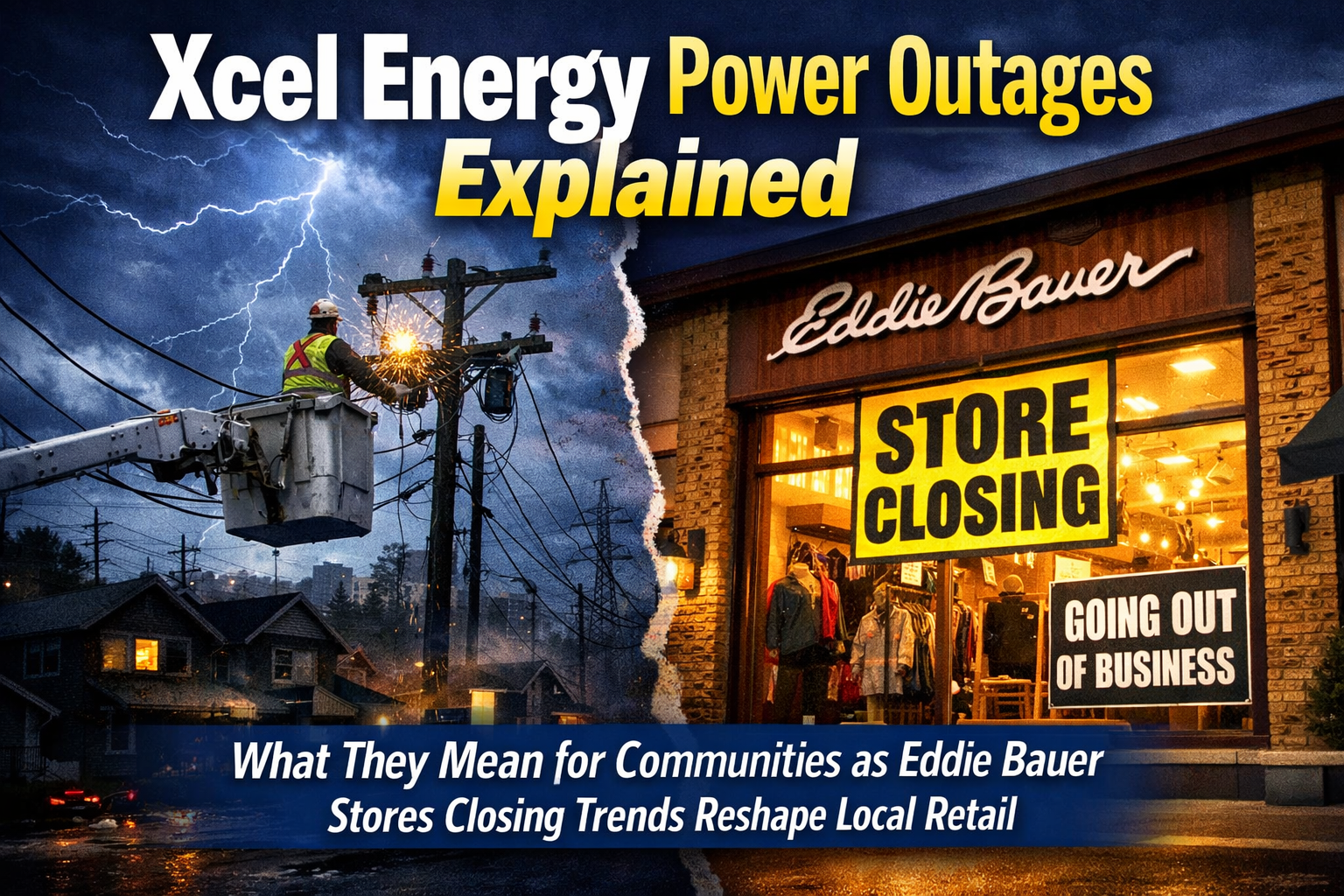
When the Lights Go Out—and So Do Local Signals
In recent years, conversations around Xcel Energy power outages have become more than just weather updates or utility alerts. They’ve turned into reflections of how fragile—and interconnected—our modern systems are. From remote work interruptions to disrupted healthcare services, power outages ripple across daily life. Interestingly, these disruptions often surface alongside broader economic signals, including retail contractions like eddie bauer stores closing, which many communities across the United States have begun to notice.
At first glance, electricity reliability and retail closures seem unrelated. But when you zoom out, both tell a story about infrastructure stress, changing consumer behavior, and how towns adapt when long-standing systems are tested.
Understanding Xcel Energy and Its Role in the U.S. Power Grid
Xcel Energy is one of the largest utility providers in the United States, supplying electricity and natural gas across multiple states, including Minnesota, Colorado, Texas, and parts of the Midwest and Southwest. Its service territory covers millions of households, making any outage—planned or unexpected—highly visible.
Power outages linked to Xcel Energy are often caused by severe weather events, aging infrastructure, wildfire-prevention shutoffs, or sudden spikes in demand. While no utility can guarantee 100% uptime, the frequency and duration of outages have become a point of public discussion, especially as climate patterns grow more extreme.
Why Xcel Energy Power Outages Are Becoming More Noticeable
One reason outages feel more disruptive today is how dependent we’ve become on continuous electricity. A decade ago, a two-hour outage might have been an inconvenience. Today, it can halt remote work, disrupt online schooling, and knock out smart-home systems.
Another factor is transparency. Real-time outage maps, social media updates, and local news coverage make every blackout more visible. Customers don’t just experience outages—they track them, compare restoration times, and share frustrations publicly. This visibility has pushed utilities like Xcel Energy to improve communication, but it has also raised expectations.
Economic Ripples: From Power Reliability to Retail Stability
When power outages hit commercial districts, small and mid-sized businesses feel the pressure immediately. Lost sales, spoiled inventory, and reduced foot traffic can add up quickly. Over time, repeated disruptions can influence broader retail decisions, especially for national brands evaluating store performance.
This is where conversations often drift toward eddie bauer stores closing. While Eddie Bauer’s retail strategy is influenced by many factors—such as e-commerce growth and shifting consumer habits—local infrastructure reliability plays a subtle role. Retailers assess not just rent and demographics, but also operational stability. Frequent outages can quietly tip the scales when companies decide which locations to keep open.
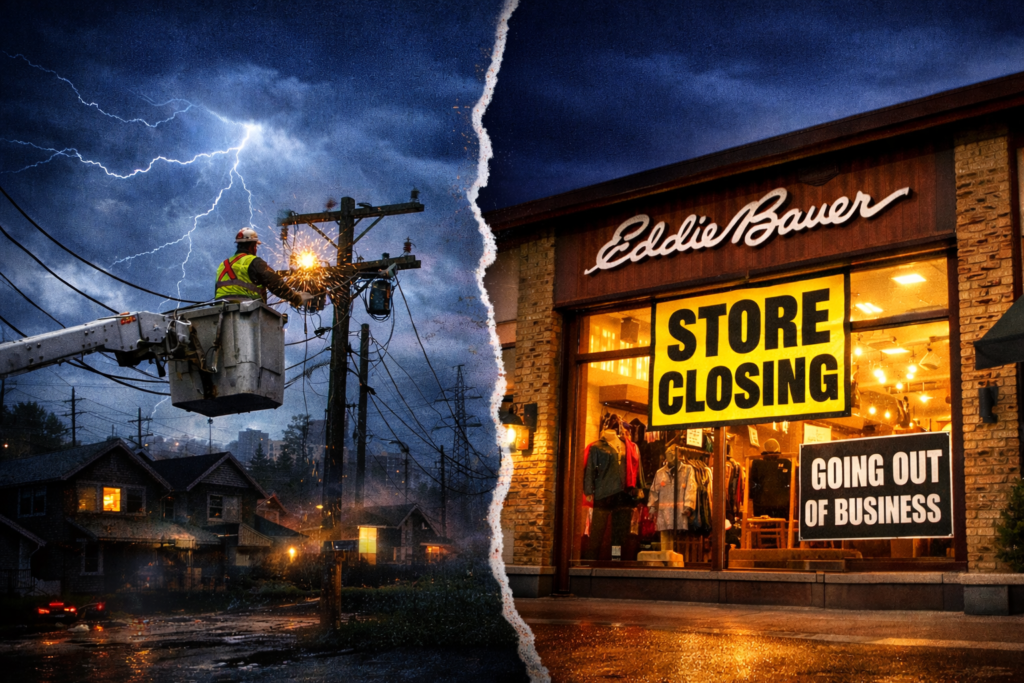
A Closer Look at Eddie Bauer’s Retail Shifts
Eddie Bauer has been a familiar name in American malls and shopping centers for decades. However, like many legacy retailers, it has streamlined its physical presence in recent years. Discussions around eddie bauer stores closing often focus on changing fashion trends and online competition, but local economic resilience matters too.
When a community faces repeated power disruptions, reduced consumer confidence can follow. Shoppers may avoid areas perceived as unreliable, pushing retailers to reconsider brick-and-mortar investments. While power outages are rarely the sole reason for store closures, they form part of the broader ecosystem that shapes retail survival.
Comparing Power Outage Impacts Across Sectors
| Area Affected | Short-Term Impact | Long-Term Consequence |
|---|---|---|
| Residential Homes | Loss of comfort, connectivity issues | Increased investment in backup power |
| Small Businesses | Missed sales, operational delays | Relocation or reduced hours |
| National Retail Chains | Temporary closures, staff disruptions | Store consolidation decisions |
| Local Economy | Slowed daily activity | Shifts in commercial landscape |
This comparison shows how something as simple as a power outage can quietly influence decisions that reshape neighborhoods over time.
How Xcel Energy Is Responding to Outage Challenges
To its credit, Xcel Energy has invested heavily in grid modernization, renewable integration, and faster restoration technologies. Smart meters, automated switching systems, and predictive maintenance are all designed to reduce outage duration. In regions prone to storms or wildfires, the company has also adjusted safety protocols, even when those decisions are unpopular in the short term.
For consumers and businesses, the key shift has been adaptation. Backup generators, battery storage, and flexible work models are no longer luxuries—they’re becoming standard responses to an uncertain power landscape.
The Human Side: Living Through Repeated Outages
Talk to residents in outage-prone areas, and you’ll hear stories that go beyond inconvenience. Parents juggling remote work and school, shop owners closing early, and elderly residents worrying about medical devices all experience outages differently. These personal stories often mirror the broader anxieties communities feel when familiar storefronts disappear and headlines about eddie bauer stores closing circulate.
Both situations trigger the same question: how stable is our local environment, and what can we do to protect it?
What Communities Can Learn From These Trends
Xcel Energy power outages and retail closures are signals, not just problems. They highlight the need for resilient infrastructure, diversified local economies, and proactive planning. Communities that invest in grid reliability, support small businesses, and encourage mixed-use development tend to weather these changes better.
For consumers, awareness is power. Understanding why outages happen and how economic shifts occur helps people make informed decisions—from supporting local shops to advocating for infrastructure upgrades.
Conclusion: More Than Just Power and Stores
At their core, Xcel Energy power outages and discussions around eddie bauer stores closing reflect a period of transition in the United States. Energy systems are evolving, retail is redefining itself, and communities are caught at the intersection of both.
Rather than viewing outages or store closures as isolated events, it’s more useful to see them as part of a larger story about adaptation. The towns that thrive will be those that respond thoughtfully—by strengthening infrastructure, embracing flexibility, and keeping people at the center of every decision.
FAQ
1. Why do Xcel Energy power outages happen so frequently in some areas?
Xcel Energy power outages usually occur due to severe weather conditions like storms, heavy snowfall, heatwaves, or high winds. Aging power infrastructure, wildfire prevention shutdowns, and sudden spikes in electricity demand can also increase outage frequency in certain regions.
2. How long do Xcel Energy power outages typically last?
Most Xcel Energy outages are resolved within a few hours, but larger outages caused by storms or equipment damage can take longer. Restoration time depends on safety checks, crew availability, and how widespread the damage is across the power grid.
3. Can frequent power outages affect local businesses and retail stores?
Yes, repeated power outages can significantly impact local businesses. Lost sales, damaged inventory, and reduced customer foot traffic can hurt profitability, which sometimes contributes to broader retail decisions, including store downsizing or closures.
4. Are eddie bauer stores closing because of power outages?
Eddie Bauer stores are not closing solely because of power outages. However, ongoing infrastructure issues, combined with rising operational costs, changing shopping habits, and increased online competition, can influence long-term retail strategies in affected communities.
5. What can residents and businesses do to prepare for future power outages?
Residents and businesses can reduce disruption by using backup power solutions, keeping emergency supplies ready, enabling outage alerts, and planning flexible work or business operations. These steps help minimize downtime during unexpected power failures.